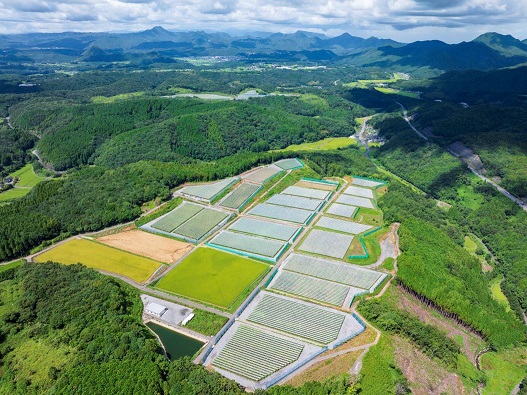
To take advantage of the characteristics of Hinohikari grown in Usa, a grain-growing region in Oita Prefecture, it is important to bring out sourness and sweetness in a well-balanced manner when brewing sake. We used high-potency koji (rice malt) to control the activity level of yeast and saccharification of koji and pressed the rice at an alcohol content of 14%.
This Japanese sake captures a fresh flavor after filling, capping, and then pasteurization are completed.

■Characteristics/special properties of this lot
[Raw ingredients/Processing of raw ingredients]
HINOHIKARI grown in 2023 was used.
The preparation period is from the end of February to the end of March with remaining coldness. The temperature of the brewing water varied although it was low, between 5℃ and 10℃. It was hard to decide the absorption time, but we achieved 131.6-133.3% for both koji rice and kake rice (addition).
[Fermentation]
Water was added rather early from the beginning of the fermentation to the middle stage. No water was added after the final stage, and the fermentation balance was achieved by adding water 10 times in total.
Pressing was performed on the 26th day of fermentation according to the alcohol production status and analysis values. The sake was moved without creating bubbles, filled while leaving a slight fizzy sensation, and sterilized with heat using a pasteurizer.
■Tasting comment (Oct. 2025)
Radiant and greenish crystal. You can smell the aroma of fruits such as apple, white peach, and apricot as well as the scent of flowers. When taking a sip, you can taste the fruity sweetness, and an exquisite balance is created between strong sourness and subtle bitterness. The aftertaste is pleasant, giving depth and power to the taste.
It can be paired well with a dish like fruit and prosciutto and with dry fruits and nuts such as apricots and cashew nuts. You can enjoy a comfortable flavor while drinking cold sake in a wine glass.

■Characteristics/special properties of this lot
[Raw ingredients/Processing of raw ingredients]
HINOHIKARI grown in 2024 was used.
Since it showed a tendency toward difficult dissolution like the recent rice, we shifted from ordinary rice polishing to flat rice polishing.
At the time of flat rice polishing, we occasionally came across cracked rice after washing and soaking the rice. Therefore, we reduced the water flow and kept the rice and soaking water at the same temperature to prevent cracking.
[Fermentation]
Water was added in the early stage of fermentation (from the 5th day). While monitoring the state of moromi (fermented rice mash), we adjusted by providing additional water.
Pressing was performed on the 27th day of fermentation according to the alcohol production status and analysis values.The sake was moved without creating bubbles, filled while leaving a slight fizzy sensation, and sterilized with heat using a pasteurizer.
■Tasting comment (Jul. 2025)
A glossy, radiant crystal. You can smell the aroma of fruits from southern countries, such as pineapple, melon, and banana, as well as the scent of flowers, sweet nectar, and subtle vanilla. The fruity sweetness, sourness, and subtle bitterness are nicely harmonized, and a well balanced taste is created. Rich taste of Japanese sake with a long-lasting aftertaste.
It can be paired well with a dish like fruit and prosciutto and with dry fruits and nuts such as apricots and cashew nuts. You can enjoy a comfortable flavor while drinking cold sake in a wine glass.

■Characteristics/special properties of this lot
[Raw ingredients/Processing of raw ingredients]
HINOHIKARI grown in 2023 was used.
When the late summer heat subsided in October, we finally made preparations in the appropriate environment. The temperature of the brewing water varied between 20℃ and 24℃ depending on the climate. It was hard to decide the absorption time, but we achieved 131.5-132.5% for both koji rice and kake rice (addition).
[Fermentation]
A large amount of water was added in the middle stage of fermentation. There was no additional water in the beginning and after the final stage, and the fermentation balance was achieved by adding water 9 times in total.
Pressing was performed on the 25th day of fermentation according to the alcohol production status and analysis values. The sake was moved without creating bubbles, filled while leaving a slight fizzy sensation, and sterilized with heat using a pasteurizer.
■Tasting comment (Jul. 2025)
A glossy, radiant, and pale yellowish crystal. You can smell the aroma of fruits from southern countries, such as pineapple and banana, as well as the scent of flowers and sweet nectar. When taking a sip immediately after opening the bottle, you will feel a fizzy sensation. Yon can taste a fruity sweetness. A mild sourness and subtle bitterness enhance the entire taste in a harmonious way. It has a rich flavor with long-lasting aftertaste.
It can be paired well with a sweet and salty dish such as fruit like melon and prosciutto and with dry fruits and nuts such as dry mango and cashew nuts. You can enjoy the gorgeous flavor of cold sake in a wine glass.

■Characteristics/special properties of this lot
[Raw ingredients/Processing of raw ingredients]
HINOHIKARI grown in 2023 was used.
We could prepare rice in an ideal environment in February to March with severe coldness. The dissolution status of the rice was not changed, but we had a prospect on the soaking time by using brewing water at around 14℃ for washing and soaking the rice, and the targeted water absorption was achieved.
[Fermentation]
Water was added early from the beginning of fermentation to the middle stage. After the middle stage, water was added 10 times in total based on analytical values for several days. Pressing was performed on the 26th day of fermentation according to the alcohol production status and analysis values.The sake was moved without creating bubbles, filled while leaving a slight fizzy sensation, and sterilized with heat using a pasteurizer.
■Tasting comment (Jul. 2025)
A glossy, radiant, and greenish crystal. You can smell the sweet and fruity flavor of apple and banana as well as the scent of flowers like roses. You will feel a fizzy sensation immediately after opening the bottle. When taking a sip, you will taste the sweetness of fruits. It has a harmonious taste of mild sourness and subtle bitterness. With a long-lasting aftertaste, you will be filled with a pleasant flavor and taste.
It can be paired well with a sweet and salty dish such as fruit like melon and prosciutto and with dry fruits and nuts such as dry mango and cashew nuts. You can enjoy the gorgeous flavor of cold sake in a wine glass.

■Characteristics/special properties of this lot
[Raw ingredients/Processing of raw ingredients]
Hinohikari rice produced in 2023 was used.
Considering the poor solubility of rice due to the continued high outdoor temperature during the growing period in summer, koji rice was soaked at a setting of 133%. Thus, the koji rice was finished with sufficient enzyme power to promote dissolution of kake-mai (sake rice except for koji making).
The soaking time for kake-mai was increased, resulting in 132-133%. The water content was lower than the target despite a longer soaking time. Therefore, by controlling the steam at the end of the steaming process, alcohol fermentation was sufficiently carried out by yeasts in the fermented mash and we could control an ideal sugar concentration suitable for producing aromatic components.
[Fermentation]
In the fermentation stage, alcohol production and flavor were adjusted while balancing sweetness and aroma. On the 25th day of fermentation, the rice was pressed and sake was moved without making bubbles. The sake was filled leaving a slightly sparkling sensation characteristic of freshly pressed sake. It was then pasteurized.
■Tasting comment (Apr. 2025)
Glossy, clear pale yellow color. The aroma is soothing and yet gorgeous. You can smell the nuances of ripe tropical fruits and violet. When you take a sip, you will feel a mild attack(*) with moderate sweetness, followed by good sourness, and leaving slight bitterness.
The aftertaste lasts moderately and is harmonious overall. It goes well with strong tasting food. You can enjoy the sake after cooling sufficiently with horse mackerel and yellowtail sashimi (fresh raw fish) from Oita Prefecture with sweet soy sauce in Kyushu or fried spring chicken.
*Attack- First impression when taking a sip

■Characteristics/special properties of this lot
[Raw ingredients/Processing of raw ingredients]
Hinohikari rice produced in 2023 was used.
Considering the poor solubility of rice due to the continued high outdoor temperature during the growing period in summer, koji rice was soaked at a setting of 133%. Thus, the koji rice was finished with sufficient enzyme power to promote dissolution of kake-mai (sake rice except for koji making).
To make kake-mai easily soluble, we aimed at 133% or more but finished at approximately 131%. Therefore, by controlling the steam at the end of the steaming process, alcohol fermentation was sufficiently carried out by yeasts in the fermented mash and we could control an ideal sugar concentration suitable for producing aromatic components.
[Fermentation]
In the fermentation stage, alcohol production and flavor were adjusted while balancing sweetness and aroma. On the 24th day of fermentation, the rice was pressed and sake was moved without making bubbles. The sake was filled leaving a slightly sparkling sensation characteristic of freshly pressed sake. It was then pasteurized.
■Tasting comment (Apr. 2025)
Glossy, clear pale yellow color. The aroma is gorgeous, and you can smell the nuances of tropical fruits such as mangoes, pineapples, and strawberries, as well as nectar. When you take a sip, you will feel a well-balanced attack(*) with yogurt-like flavor, sweetness, sourness, and slight bitterness, which will give you a refreshing impression.
The aftertaste lasts moderately. You can enjoy the taste and pleasant aroma with Caesar salad using fresh cheese and appetizers such as caprese.
*Attack- First impression when taking a sip

■Characteristics/special properties of this lot
[Raw ingredients/Processing of raw ingredients]
HINOHIKARI produced in 2023 was used for the first time.
Considering the poor solubility of rice due to the continued high outside temperature during the growing period in summer, soaking of koji rice was set at 133%. Thus, the koji rice was finished with sufficient enzyme power to promote dissolution of kake-mai (sake rice except for koji making).
Part of kake-mai was soaked to achieve the water content of 135% or more so that kake-mai can be dissolved as easily as possible. Thus, alcohol fermentation was sufficiently carried out by yeasts in the fermented mash and we could control an ideal sugar concentration suitable for producing aroma components.
[Fermentation]
In the fermentation stage, alcohol production and flavor were adjusted while balancing sweetness and aroma, and on the 25th day of fermentation, the rice was pressed and sake was moved without making bubbles. The sake was filled leaving a slightly sparkling sensation characteristic to freshly pressed sake and then pasteurized.
■Tasting comment (Mar. 2025)
The color is clear pale yellow with radiant shine. You will feel a fruity aroma such as an apple or pear and a nuance like flowers. When you have a sip, you can taste a strong and clear sweetness like a hard candy. Mild sourness will give you a clear impression, and the strong aftertaste lasts long.
It pairs well with sweet and salty dishes such as prosciutto and melon and also dried fruits such as dried mango. Enjoy the cooled sake in a wine glass feeling a pleasant aroma.

■Characteristics/special properties of this lot
[Raw ingredients/Processing of raw ingredients]
Considering the poor solubility of rice due to the continuous outdoor high temperature during the growing period in summer, rice for making koji in water was soaked at a setting of 132% to create a state with sufficient enzyme power to promote dissolution of kake rice (sake rice to make fermented rice mash).
Kake rice was similarly soaked in water at a setting of 132%, which allowed us to achieve the ideal sugar concentration for alcohol fermentation of yeast using fermented rice mash and the creation of aroma components.
Therefore, the acidity and amino acid content are low, and you can taste more sweetness in this lot.
[Fermentation]
The level of alcohol production and flavor were cheked, and on the 25th day of fermentation, the mash was pressed, and the sake was poured without generating foam. As it was filled in bottles, it retained a slight sparkling sensation characteristic of freshly pressed sake. It was then pasteurized.
■Tasting comment (Nov. 2024)
Slightly pale yellowish crystal color. You will smell a fruity aroma like that of apples and passion fruit. When you take a sip, you will taste the sweetness, which is just like that of a Red Delicious apple. The sourness and slight sparkling sensation give you a comfortable refreshing feeling in your mouth, and the flavor encourages you to drink another glass.
Enjoy drinking it cold in a wine glass along with antipasto such as caprese with tomato and mozzarella cheese and Caesar salad as well as fruit, including dried fruits.



